His parents ran a conference center in the mountains, and its third floor held a small arcade: Gorf, Defender, and Asteroids. He was about seven or eight. All three are rebuilt now, as browser games, and they are playable today.
His parents ran a conference center in the mountains. On its third floor was a small arcade, three machines and nothing else: Gorf, Defender, and Asteroids. He was about seven or eight years old.
His dad would open the machines and give him free credits. With unlimited plays and only three machines to spend them on, he often had his name in all ten of the top-ten spots.
He is rebuilding all three now, as HTML games that run in a browser, to play and share with his own kids. This is not a preservation project and it is not a best-of list. It is one room, rebuilt. Go play them.
The selection was inventory, not taste.
Three arcade classics on one page usually means somebody's shortlist: favorites, the canonical picks, or the ones that were technically interesting to rebuild. That is not what happened here.
There was no shortlist. There was a room with three machines in it, and whoever put those three cabinets on the third floor decided what a kid would spend a childhood playing. If a fourth cabinet had been up there, this page would have four sections instead of three.
That makes the selection completely arbitrary from the outside and completely non-negotiable from the inside. These are not the three best arcade games. They are the three that were there.
Matching how it looked was the whole assignment.
What that machine looked like from three feet away is the thing worth rebuilding exactly. It did not look like a game with pictures in it. It looked like a screen drawing itself out of thin white lines.
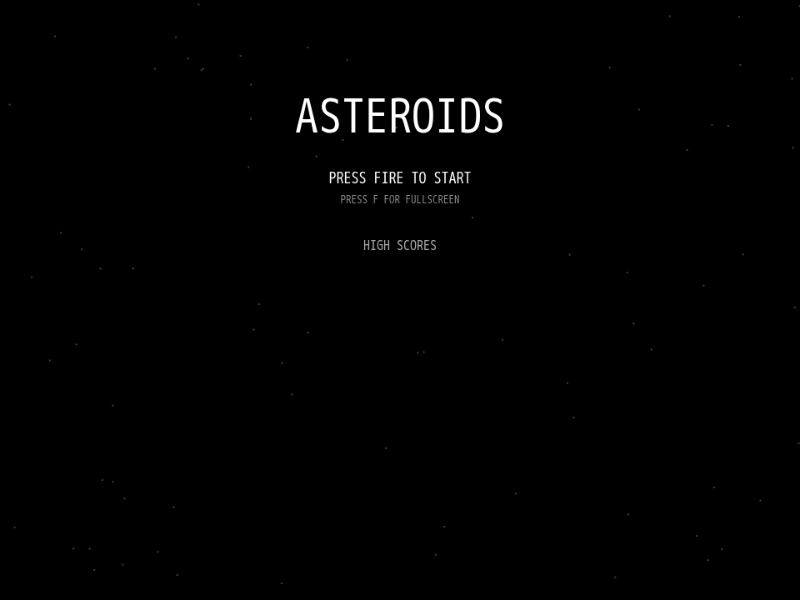
Atari's Asteroids (1979) ran on a vector monitor: unfilled stroked outlines, no fill, no color, a rock that was a shape rather than a picture of a rock. The rebuild renders the same way, true vector style with unfilled stroked polygons. A filled sprite would have been easier to build, and wrong.
Fly off the right edge and you come back on the left. Same on all four edges. The screen was the entire world you could ever be in.
The original screen was drawn, not pictured. The rebuild draws it too.
The radar was the only reason you knew in time.
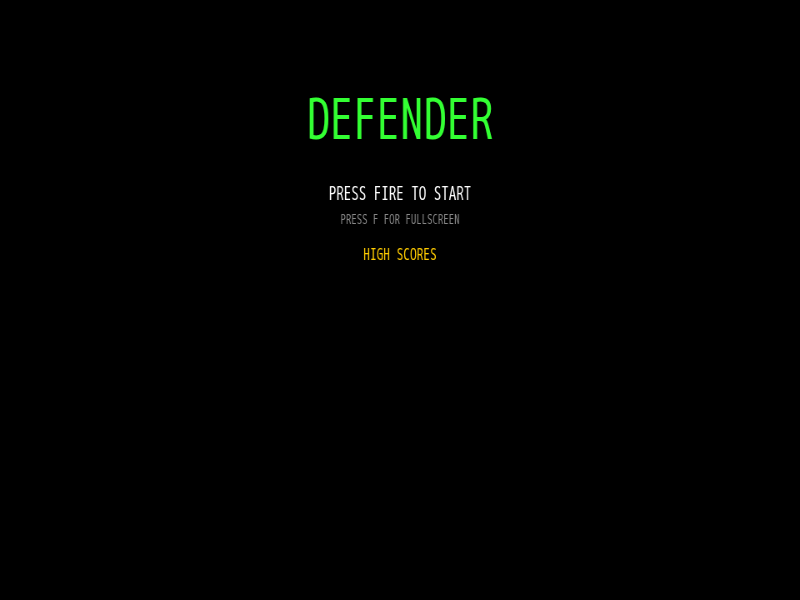
The world kept going past both edges of the screen, three screens' worth of it, and the ship flew out into all of it. Defender was the machine that taught you things were happening where you could not see them.
You were rescuing humanoids from abductors, so the thing happening where you were not looking was the thing you were about to lose.
A strip of radar sat above the action. It showed the whole world at once, compressed, so you could see threats forming out where the screen ended: landers, mutants, bombers, baiters, pods, and swarmers. It was the only reason you ever knew in time.
The rebuild carries the scrolling world, the camera, and the radar.
The radar is what made a world bigger than the screen survivable.
One cabinet held five different games.
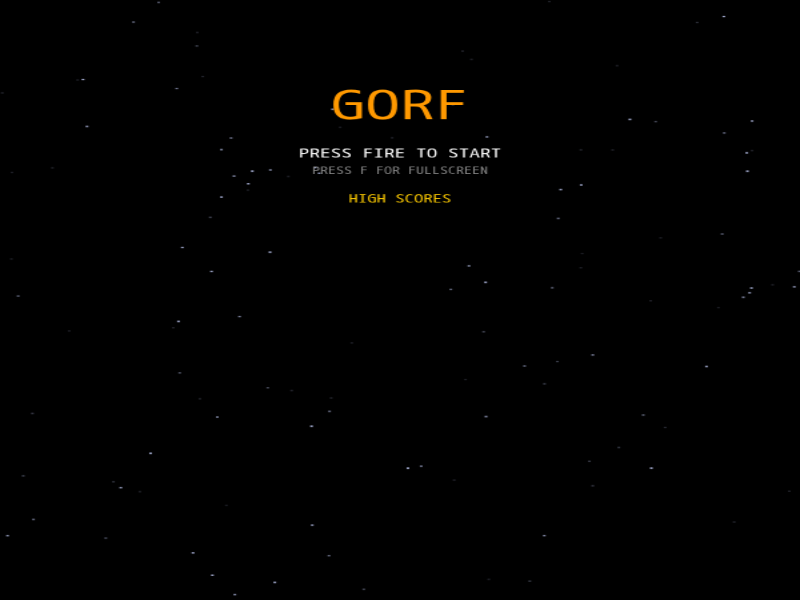
Midway's Gorf (1981) really was five different games stacked inside one machine. That is not a modern reinterpretation of the idea; the rebuild keeps the same shape. It is why one cabinet could hold a kid for an entire afternoon.
Astro is a Space Invaders-style descending grid. Laser is a squad dive-bomber battle. The third mission is a Galaxians-style swooping formation. Warp spawns enemies from a central wormhole. A flagship boss fight closes it out.
Five games in one machine is a lot of afternoon, and afternoons cost quarters.
The barrier removed is the same gesture, translated.
His dad opened the cabinet and gave him credits, so the machine stopped asking for money. That was the whole gesture.
He cannot hand his kids a cabinet or a screwdriver. What he can do is build the games so that nothing stands in front of them: no install, no account, no store, no coin. No frameworks and no build step, so the file opens straight from a browser or a link. Every visual is drawn as shapes rather than loaded from image files. Every sound is generated in the browser rather than played back from an audio file.
This is not the same as the third floor, and he knows it. It is the part of it that travels.
Nothing to install, nothing to buy. Open it and play.
The board is waiting empty for someone else's name.
All three rebuilds share a classic three-letter arcade high-score dial-in screen, the reward the machines actually paid out.
With free credits and only three machines, he often had his name in all ten of the top-ten spots. Ten out of ten is not a claim about skill when you are the only kid in the building with unlimited plays.
That board is waiting empty now, in three games his kids are about to play. The names that go on it will not be his. That is the whole reason the screen got rebuilt instead of skipped.
The three-letter dial-in was the reward the machines actually paid out.
What you remember about a game is usually the person who made it possible to play it. Somebody always has to open the machine.
White lines on black. A screen that drew itself, four edges that wrapped, and nothing on it that was a picture of anything.
Play →The world kept going past the screen. Three screens wide, humanoids being carried off where you were not looking, and a radar that told you in time.
Play →Five games in one cabinet. Astro, Laser, the formation mission, Warp, and a flagship at the end of it.
Play →He cannot give his kids the third floor. He can give them the three machines that were on it.